From privacy and space planning to flexibility and growth, here’s what to consider when deciding whether a private office is right for your team
Private offices are having a bit of an identity crisis. Ask someone to picture one and they might imagine a single desk behind a closed door. Ask someone else and they’ll describe a home base for a 15-person hybrid team, complete with shared meeting rooms, lounges, hospitality, and enough flexibility to grow without calling a commercial broker every six months.
Both can be right. But the reasons businesses choose one, and what they should expect from one, have changed considerably. And sometimes, the need announces itself much less formally.
One week, your newest employee is taking onboarding calls from the lounge because every meeting room is booked. A month later, a client meeting starts with someone wandering the hallway trying to find you, and someone from Finance quietly asks if there’s somewhere more private to review payroll.
None of those moments feel particularly significant on their own. But eventually they begin pointing toward the same conclusion: the way your team works has changed. Your workspace should probably change with it, too.
This guide covers what a private office is, why businesses use them, how much space you may actually need, and what to consider when deciding whether one makes sense for your team.
What Is A Private Office?
A private office is a dedicated, enclosed workspace designed for one person or a team within a larger workplace. Unlike coworking memberships or shared workspaces, a private office gives your business its own secure space while still providing access to shared amenities like meeting rooms, lounges, kitchens, hospitality support, and workplace services.
Private offices are often chosen by businesses that need more privacy, consistency, or room to grow than shared workspace can comfortably provide. They’re especially well-suited for growing teams, hybrid organizations looking for a reliable home base, businesses that regularly meet with clients, or companies that want the flexibility of a managed office without the long-term commitment and operational responsibilities of a traditional lease.
That’s the definition.
But definitions don’t usually tell you when a private office actually makes sense.
A private office isn’t the “next level” after coworking. It isn’t a reward for hiring your tenth employee. And it certainly isn’t about putting four walls around the same work you’ve always done. At its best, a private office solves the operational friction that growing businesses eventually run into: more collaboration, more confidentiality, more consistency, and a place that supports the way your team works today, not the way it worked a year ago.
This guide walks through the signs it’s time to consider a Private Office, how to evaluate your options, and what to think about before making the move.
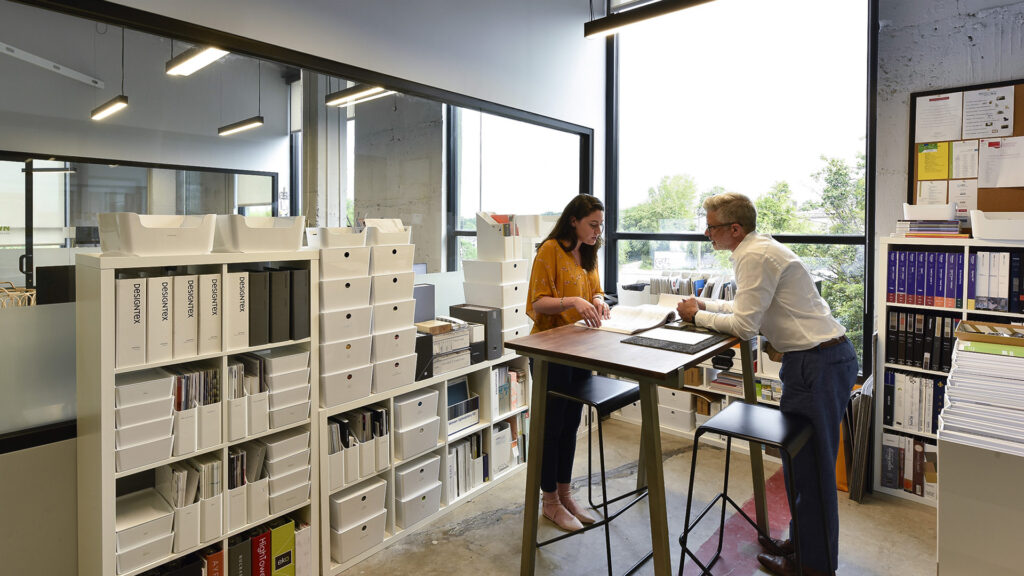 Growth rarely announces itself. More often, it shows up as little moments your workspace wasn’t designed for.
Why Do Businesses Choose Private Offices?
This is one of those questions that’s easy to answer with a product brochure.
Privacy. Security. Dedicated desks. Meeting rooms. The option to bring that one mini fridge you own. Those are all true reasons.
They’re just not usually the reason businesses make the move.
The companies we’ve met over the years don’t wake up saying, “I think today’s the day we need a private office.” Instead, they find themselves solving the same small problems over and over again.
Where can we interview this candidate?
Where can Legal take this call?
Where can everyone actually fit for our Monday planning meeting?
Can we leave the whiteboard up overnight?
Where do we store everything?
Those questions don’t point to a lack of amenities.
They point to a business that’s becoming more established, more collaborative, and more complex.
A private office isn’t about creating separation from other people. It’s about creating consistency for your own team.
THE DECISION MOMENT: There’s usually a point where the conversation changes. Your team stops asking, “Can we make this work?” and starts asking, “What would help us work better?” They’re similar questions. But they lead to very different workplaces.
What we’ve noticed…
“Small businesses often come to us looking for meeting space after piecing together workdays across coffee shops and working from home. But when you dig in, they realize they’ve already grown to a point where having a true home for their day-to-day work makes more sense. I’ve seen larger businesses go through a similar realization: they come in looking to downsize or cut costs, then realize what they really needed was a better environment for their team.”
Chris Speed, General Manager
That’s something we hear often from growing teams: they’re not looking for more office, they’re looking for fewer daily compromises. Growing into a private office also doesn’t mean leaving flexibility behind. In fact, for many businesses, flexibility is exactly why they choose one.
A private office gives your team a dedicated home base while still making it easier to adapt as hiring plans change, new markets open, or work becomes more hybrid.
Because for many businesses today, the question isn’t whether to have an office. It’s what role that office should play. Feel familiar?
Check out what we found…
Businesses aren’t abandoning flexibility, they’re becoming more intentional about where and how people work. JLL’s Future of Work Survey found that 85% of organizations now expect employees to spend at least three days a week in the office, while more than 60% expect office utilization to increase over the next five years. For many growing companies, the question isn’t whether they’ll have an office, it’s what kind of office best supports the way their teams actually work.
Privacy is part of the appeal. Consistency is another. But increasingly, flexibility matters, too. A different way to think about growth, that we at Industrious believe, is that it’s not always defined as hiring twenty more people. Sometimes it looks like more client meetings, more onboarding, more confidential conversations, more collaboration.
Sometimes your business hasn’t outgrown its space. It’s outgrown improvisation.
What Are The Benefits of a Private Office
 One home base. More than one kind of workday.
One of the biggest misconceptions about private offices is that they’re primarily about square footage. They’re not. They’re about reducing friction.
When your team has somewhere consistent to collaborate, somewhere private to focus, and somewhere professional to welcome clients, fewer decisions get spent on the workplace itself.
The office quietly fades into the background.
Which, ironically, is exactly what a good workplace should do.
Ready to see what that looks (and feels) like?
If your team is starting to recognize some of these moments, seeing a few different layouts in person is often more helpful than comparing spec sheets online.
- Schedule a tour of an Industrious Private Office and see how different team sizes, layouts, and neighborhoods support different ways of working. Or, if you’re still browsing options:
- Or explore different Workplace Solutions within Industrious, and see how different work environments, amenities, and membership types fit best for the goals of your team.
How Does a Private Office Compare With a Traditional Office Lease?
The biggest difference between a private office in a flexible workplace like Industrious and a traditional office lease isn’t necessarily the square footage itself. Close the door and, well, they both have doors.
The difference is how much comes with it… and how much your business is responsible for managing.
With a traditional office lease, your company typically takes on the space itself for a longer term, along with many of the decisions and costs required to make it operational: think furniture, internet, utilities, cleaning, maintenance, and potentially the design and buildout. That greater responsibility can mean greater control, particularly for businesses that want to heavily customize their space or who know exactly what they’ll need several years from now.
That doesn’t automatically make one model better (or even cheaper) than the other.
A flexible private office can make more sense when speed, flexibility, predictable operations, and the ability to grow or change matter more. Or, put another way: one gives you an office to run. The other can give you an office that’s already running.
Who Are Private Offices Best For?
- Small businesses: provides consistency and professionalism without operating an office themselves
- Hybrid teams: a dependable home base without designing around 100% daily attendance (it’s the 2020s)
- Client-facing businesses: privacy and a professional setting for meetings
- Distributed companies: a presence in a market without opening a traditional regional office.
- Teams handling sensitive work: it’s growing everyday. Great privacy for conversations, documents, and day-to-day operations.
How Much Office Space Does Your Team Actually Need?
Our General Managers say this is usually the first practical question people ask.
They also say it’s one of the easiest to answer incorrectly.
The instinct is to count desks. Eight employees? Eight desks. Simple. Except most teams don’t actually work that way anymore.
Some people travel.
Some people split their week between home and the office.
Some spend half their day in meetings.
Others need long stretches of uninterrupted focus and a killer playlist.
The better question isn’t, “How many people do we have?”
It’s, “How does our team actually work?”
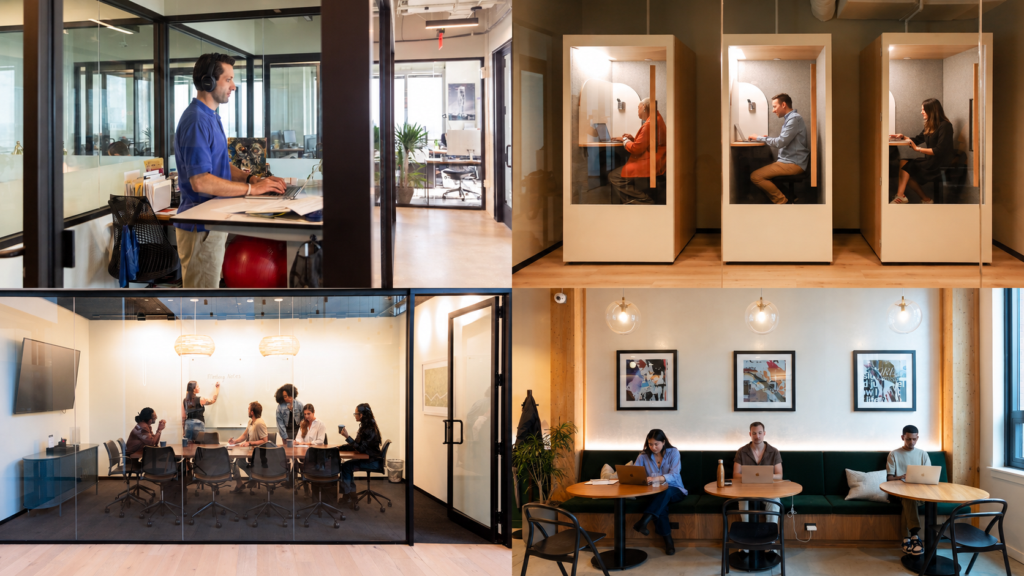 Eight people don’t necessarily need eight identical places to work.
Designing around headcount often leaves businesses paying for space they rarely use, or worse, missing the kinds of spaces people actually need every day.
Check out what we found…
According to Gensler’s Global Workplace Survey, employees consistently report that the most effective workplaces offer a variety of spaces that support different types of work—not simply more desks. Focus work, collaboration, learning, and social connection all benefit from different environments
What we’ve noticed…
“Companies planning their first private office tend to focus on the logistics: 24-hour access, parking, getting into the building, when staff is there. But the most consistent thing I hear from members later is that they didn’t expect the hospitality to make such a difference in their business. The personal touches, proactive thinking, and quick resolutions build a level of trust and humanity into office life that they didn’t necessarily know to look for.”
Brent Remby, LaunchOps Coordinator

Instead of asking…
“How many desks do we need?”
Try asking…
- How often do we meet as a team?
- Do clients visit?
- How much confidential work happens each week?
- Where do people go when they need to concentrate?
- What do new employees experience on their first day?
Those answers usually tell you much more than a floor plan ever could. We’ve learned that companies almost never regret having one fewer desk. They often regret not having one more place to think, meet, or talk privately. That’s because people don’t remember square footage; they remember whether work felt easy.
Signs Your Team Has Outgrown Shared Workspace
There’s rarely one dramatic moment. It’s usually death by a thousand little inconveniences.
The same meeting room gets booked weeks in advance.
Someone starts taking sensitive calls from the stairwell.
You spend Monday mornings trying to figure out where everyone will sit.
The whiteboard gets erased before the project is finished.
People begin working around the workspace instead of with it.
None of those things are emergencies. But together, they create friction. And friction has a funny way of stealing time without anyone noticing.
A QUICK SELF-CHECK: if you’ve answered “yes” to three or more of these questions, it may be time to consider touring a private office nearby.
- Your team struggles to find space to collaborate together.
- Confidential conversations happen regularly.
- New employees don’t have a consistent place to work.
- You’re hosting clients more often.
- Storage is becoming a problem.
- Your team has grown in the past year.
- Your current setup feels like a temporary solution that’s become permanent.
 The best office isn’t necessarily the one that photographs best. It’s the one you stop having to think about.
What Should You Look For in a Private Office?
Here’s something I’ve started to notice after talking with designers, operators, and members: people are remarkably good at evaluating offices. They’re less practiced at evaluating workdays.
During a tour it’s easy to notice finishes. Coffee, natural light, the view. Those things obviously matter. But six months later? Most people aren’t talking about the countertops.
They’re talking about whether onboarding got easier. Whether clients could find them. Whether meetings started on time. Whether they finally had somewhere to focus.
The best private office isn’t necessarily the one with the most amenities. It’s the only that quietly removes obstacles from your day.
Questions You Should Ask Before Choosing a Private Office?
Instead of asking, “What’s included?” you can also ask:
- How does this space change if my team grows?
- Where do people naturally collaborate?
- What happens when something breaks?
- How easy is it to reserve meeting space?
- Can we personalize the office as our business evolves?
The easiest way to answer these questions is to walk through a space with someone who operates it every day. Schedule a tour to compare layouts, ask questions, and see how different office configurations support different ways of working.
One Last Thought
I’ve toured beautiful offices. I’ve toured expensive offices. I’ve toured offices with every amenity you could imagine. The ones I remember most weren’t the nicest. They were the ones where it was obvious people could get great work done.
Those aren’t always the same thing. Because when your workplace keeps pace with your business, your team gets to spend less time thinking about the office, and more time doing the work that brought them there in the first place.
Which workspace is right for your team? Explore over 250 locations in 85 countries worldwide with multiple workplace offerings for all stages of growth.