He remembers the names, notices the little things, and knows who should meet whom. For Marcus Nenadovic, making a better workday starts with paying attention.
Video by Jimell Greene
On a quiet day at Industrious at the Homer Building, Marcus Nenadovic checks the dry-erase markers.
He restocks the napkins, paper, and pens. He resets the phone booths so they’re ready for whoever walks in next. If a member mentioned that they’ll be working late on a big print job two weeks from now, he makes a note to ensure the printer is stocked before they arrive.
No one may notice that work. That’s the point.
“Consistency in this environment doubles down with integrity,” Marcus says. “It’s doing things even when people aren’t around to see.”
As Member Experience Manager, Marcus is responsible for keeping one of Industrious’ busiest Washington, D.C., locations running. But after nine years in the coworking industry, including four at Industrious, he has a different way of describing his job.
“I am a community cultivator.”
The work before the work
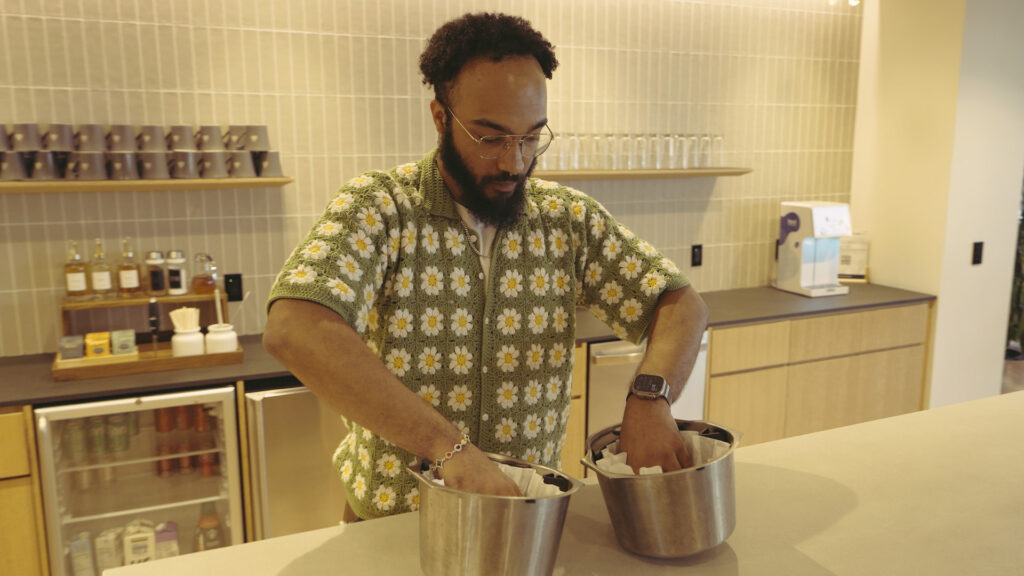 Photo by Jimell Greene
For Marcus, a workspace that functions has four walls, desks, and chairs. People can arrive, do what they need to do, and leave.
A workplace that takes care of people is something else entirely.
“It has life. It has color. It has warmth and depth,” he says. “That has everything to do with the characters we have in the space.”
Creating that feeling starts with anticipating what someone might need before it becomes a distraction. Marcus makes sure a conference room has enough pens and notepads for the expected attendees—and a few more, in case someone brings extra guests. He helps rearrange an office into a makeshift meeting room, connects a new laptop to the printer, or steps in when a member loses a key card while clients are arriving.
“We are an extension of our members’ businesses,” he says. “It’s important for us to follow exactly what they need.”
Sometimes, what someone needs is obvious only if you’re paying attention. Marcus knows the look of a visitor scanning the hallways in search of a conference room—or a restroom. Instead of pointing, he walks them there.
He calls it taking the first five steps: greeting someone warmly, moving toward them, and helping them all the way to where they need to go. If they’re headed into a meeting, he’ll make sure they understand the room’s technology, ask whether they need coffee or water, and offer to greet the rest of their guests.
It’s a small distinction. It can change the way the entire day feels.
Connecting the dots
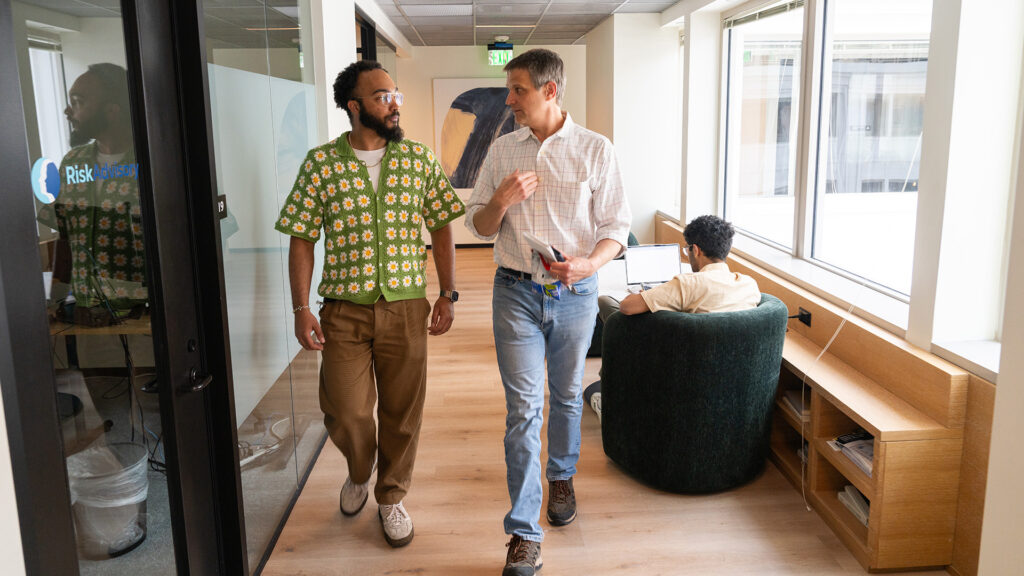 Photo by Jimell Greene
Marcus remembers people.
He remembers names, faces, conversations, and the small details that make a person distinct: a floral shirt, a perfect mustache, a shared love of Lego, or a habit of kayaking at 5 in the morning.
“As long as I can tie that to your name and face, I’ll remember you forever,” he says.
Then he does something with what he remembers.
If one member mentions kayaking, Marcus may know someone else down the hall who should meet them. He’ll introduce the two at a happy hour or another member event and see where the connection goes. He calls it “connecting the dots,” and it’s one of his favorite parts of the job.
It also shapes the way he welcomes prospective members. Before a tour, Marcus learns a little about the visitor and their company. He meets them downstairs in the Homer Building’s atrium and begins the conversation on the way to the 12th floor.
By the time they reach Industrious, it no longer feels like the beginning of a formal sales process. They’re already talking about the commute, their work, or the Lego sets displayed at the front desk.
Louis Carlton remembers that feeling from his own tour. A financial specialist and small-business owner, Louis had visited several shared offices around Washington before coming to Industrious. Some felt empty. Others never quite felt like places where he wanted to spend his days.
Then he met Marcus.
“Everybody I ran into, the way they interacted with Marcus—that’s what made it really easy for me to sign that contract,” Louis says. “It didn’t feel like a shared space. It felt more like a family.”
Super welcoming. Super capable.
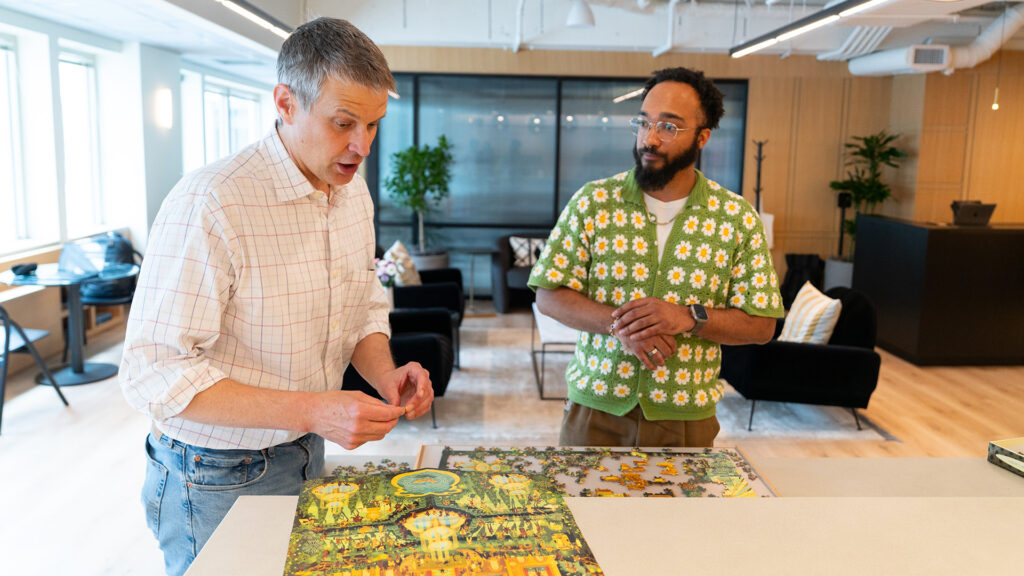 Photo by Jimell Greene
Members experience Marcus’s work in different ways.
For Louis, it’s the care Marcus shows toward his business, his clients, and even his son when he needs to come to the office. It’s also the community Marcus helps create for someone who was new to the area and accustomed to working alone.
“I don’t pay them personally. They don’t sit in any of my meetings,” Louis says of the Homer Building team. “But I do feel like the Industrious staff is part of my team.”
For Chad Breckenridge, an attorney who could work remotely full time, it’s a high five and a welcome by name—even though he doesn’t work from the Homer Building every day. It’s Marcus solving the printer problem that came with a new laptop. It’s seeing him move constantly through the space while still remaining available whenever someone needs help.
“He’s just a warm presence,” Chad says. “Clearly, the guy is busy. I see him bopping around doing work all the time, but he is available when you need him.”
Chad now works from an Industrious location two or three days a week simply because he enjoys being there.
His description of the team is succinct: “Super welcoming and super capable, both.”
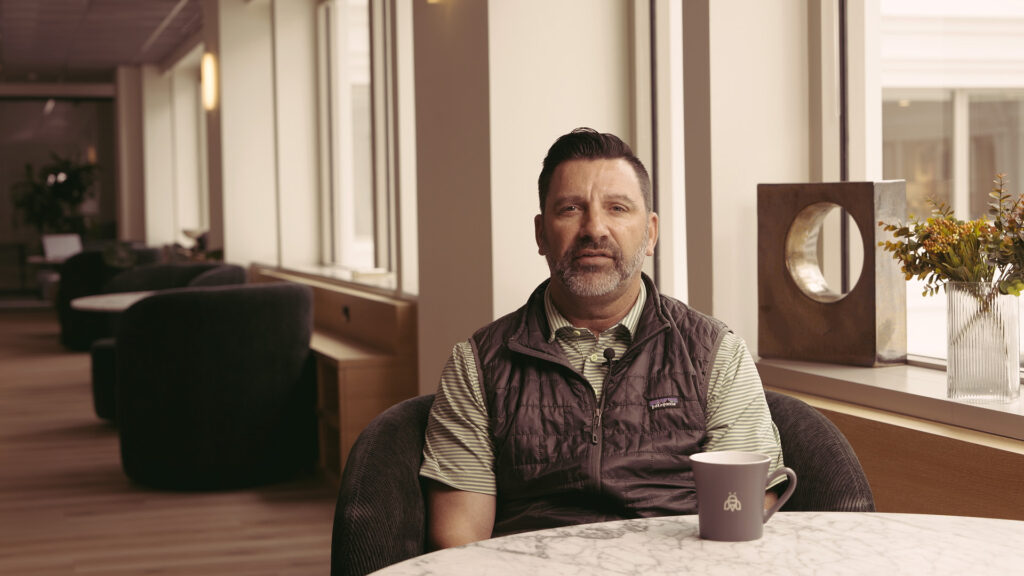 Chris Caron, General Manager | Photo by Jimell Greene
Chris Caron, an Industrious general manager who has worked with Marcus across two companies and nearly seven years, sees the same combination. He describes Marcus as the hello that helps members begin their mornings and the quiet calm that steadies the location when the day becomes complicated.
“There could be a million things going on, a fire here, a fire there,” Chris says. “Marcus knows how to control himself so others see him in control. He figures out how to prioritize and make sure everybody is getting what they need.”
That ability matters when the problem extends beyond the workplace. During construction at the Homer Building, Marcus helped members navigate disruptions while coordinating with the building’s landlord partners and engineers.
Even in a trying situation, Chris says, people enjoy working with Marcus.
“What Marcus understands about hospitality that most others don’t is that it’s not just the experience,” Chris says. “It’s how you make somebody feel.”
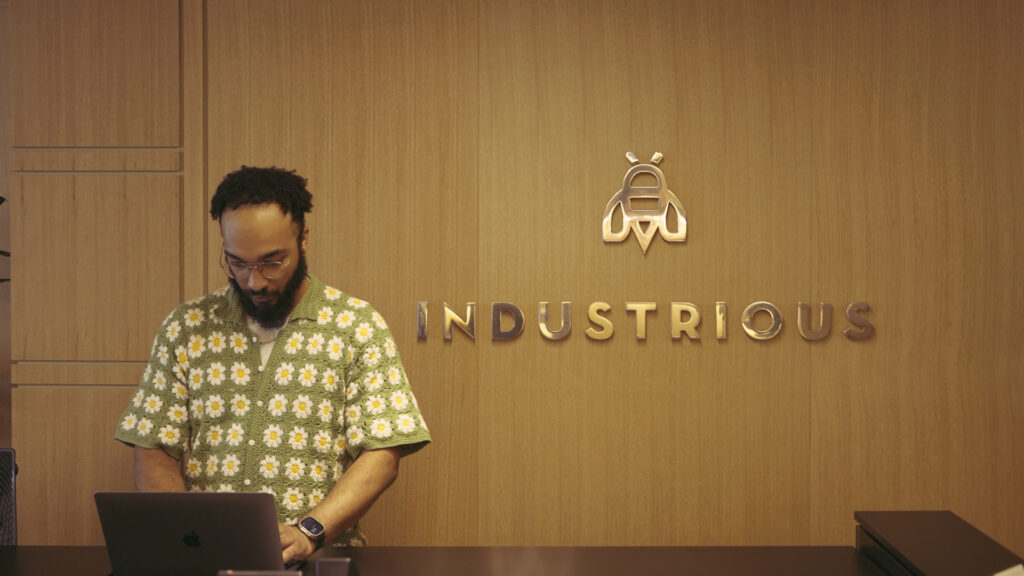 Photo by Jimell Greene
For Marcus, cultivation isn’t only a way to describe his work.
He has spent much of his life gardening in Washington, and his connection with an Industrious member helped that interest grow into something larger. While working at Industrious Bethesda, Marcus got to know the team from Rock Creek Conservancy. He began volunteering with the organization on weekends, helping remove invasive species and clean up Rock Creek.
That experience made him wonder how he could do more—and how he might bring greener practices into the workplace.
With encouragement from Chris, Marcus proposed using an Industrious professional-development grant to pursue the Master Gardener program. He began the program in January 2025 and is now expanding his knowledge of foraging, composting, and other ways people can care for the environments around them.
Eventually, he hopes to share what he learns with Industrious communities beyond his own.
The pattern feels familiar: Marcus notices something in another person, builds a relationship around it, lets that relationship change him, and looks for a way to bring what he learns back to the community.
Showing up again tomorrow
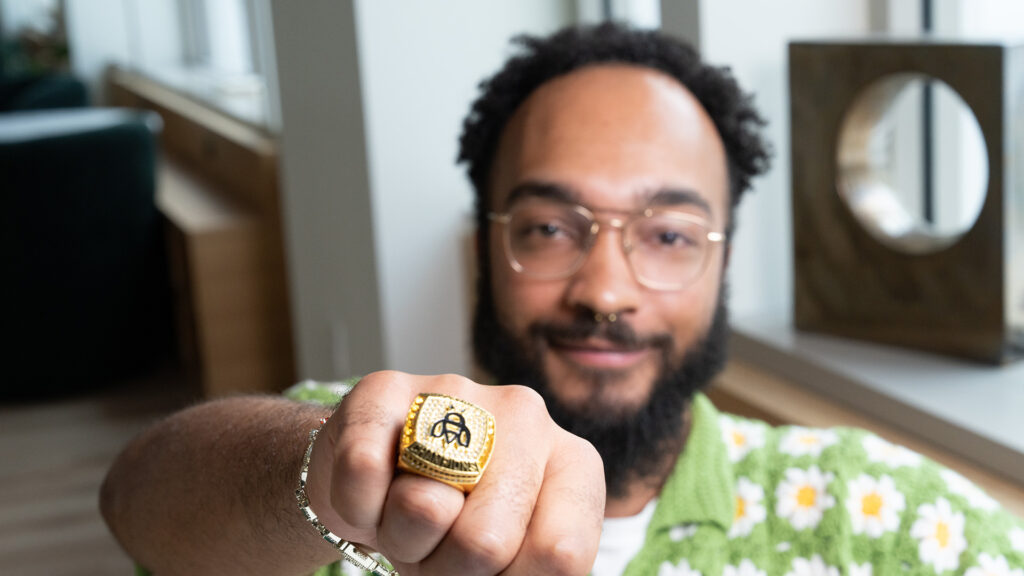 Photo by Jimell Greene
In 2025, Marcus was named Industrious’ Member Experience Manager of the Year for his work in 2024. The award came with a Super Bowl-style ring, which he keeps on display at the Homer Building beside his Lego collection.
 Photo by Jimell Greene
The recognition surprised Marcus. The members gathering around to celebrate with him did not.
For Chris, what makes Marcus exceptional isn’t one grand gesture or standout day. It’s the fact that he brings the same attention, warmth, and sense of responsibility to the workplace day after day.
“What you see today is what you’re going to get tomorrow and what you’re going to get five weeks from now,” Chris says.
Marcus has an equally straightforward definition of a better workday: everyone showing up for one another and having what they need to do their best work.
Sometimes that means solving a technology problem or preparing a meeting room. Sometimes it means introducing two people who happen to love the same thing. And sometimes it means remembering that someone likes pistachios and making sure there are some waiting the next time they come in.
The details change. The act of noticing does not.