Write the World Inc. exists mostly online, connecting over 150,000 teen writers, parents, and educators from over 190 different countries to change the world, one word at a time. But the organization’s leaders say its physical home at Industrious Harvard Square is actually the key to its impact.
For Write the World, having a physical workspace in Boston is about the kind of ideas and relationships that only emerge when people share the same room.
“We really have found the Harvard Square Industrious–and also several other locations around Boston–to be incredibly beneficial, because it gives us a beautiful, welcoming physical environment to collaborate and ideate together in a way that enables us to better the trajectories of the teens we serve. It organically strengthens our local presence as well,” said Gabrielle Lieberman-Miller, Executive Vice President of Write the World.
As an international nonprofit that serves thousands of young writers, parents, and educators, a local presence in a city like Boston is intentional. “That’s something that we were really looking for as a hybrid organization that’s global,” she said.
Building a Local Presence in Harvard Square
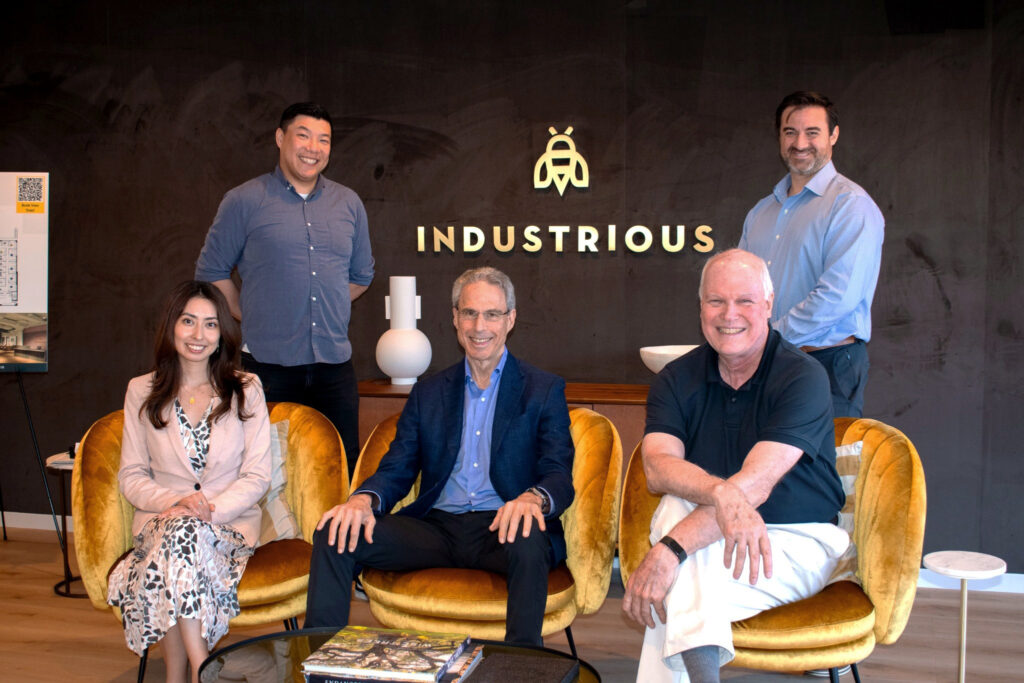
Write the World’s ties to Boston run through Harvard Square. Founded back in 2014, it was launched out of Harvard’s Advanced Leadership Initiative, “an innovative academic program designed to unleash the potential of experienced leaders to help solve society’s most pressing challenges.” Those roots made the Harvard Square Industrious a natural fit for Founder and CEO, David Weinstein.
“As the son of a lifelong educator, I’ve always deeply believed in the transformative power of education,” Weinstein said. “There’s something fitting about building a global writing community in a place that sits at the crossroads of so many of the world’s leading educational and intellectual institutions. The proximity creates tremendous opportunities for collaboration, and we’re able to easily connect with university faculty, researchers, students, authors, and leaders, as well as organizations exploring the future of education and youth development. There’s a unique energy here that reflects our mission–a place where ideas are exchanged and new possibilities take shape.”
For a nonprofit focused on youth advocacy, literacy access, and equity, being grounded locally matters.“We believe in creating deeper opportunities for teens to feel confident in their work–to feel like their words hold value,” Lieberman-Miller said. “We’ve worked with local schools and partners like Boys and Girls Club and YMCA to help close the access gap for young people across our local community. By building a coalition of philanthropic and corporate partners, we aim to ensure that teens—regardless of background, income, or ZIP code—have the support needed to tell their story for college and beyond. We’re always looking for more of these collaborators, donors, and volunteers to integrate our programming into existing networks in the local space.”
That’s where Industrious has been helpful, offering a home base where they can invite people to speak with them, cross-connect, and have these important conversations.
Space for Conversations That Don’t Happen on Zoom
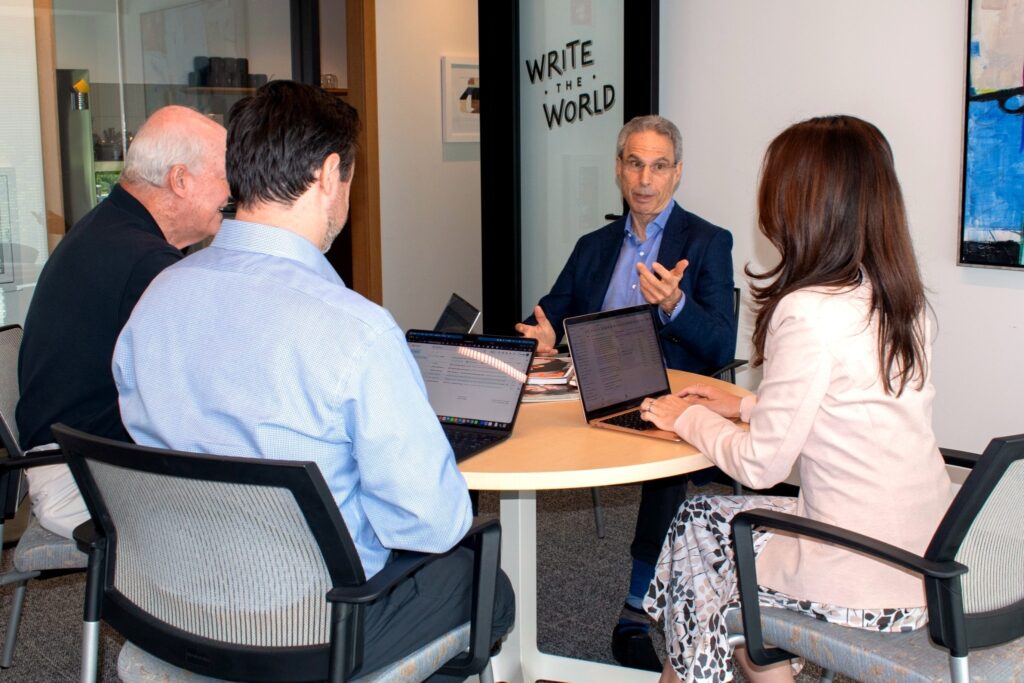
Although much of Write the World’s work is virtual, staff regularly gather in the Harvard Square office.
With a global staff of over 80 individuals–including a core staff of 12 and six local members, they have one office space which is used for varying needs. Beyond one-on-one or group meetings, Industrious gives them the infrastructure to host formal sessions, including board presentations every quarter. The organization also uses the Industrious community spaces and larger rooms for bigger gatherings: they’ve had full staff retreats to come together physically, and always welcome their international members and partners to come through if they’re in the Boston area.
For Lieberman-Miller, the value of being in person is clear. “This space together is key so that we can be more effective and creative with our strategic planning,” she noted. “There’s something different about actually meeting in person and having these sidechats, and that actually leads to deeper, bigger picture conversations to help the entire organization move forward in a more dynamic way.”
Beyond functionality, the atmosphere matters. “ Logistically, [it’s] been really great all around,” she added. “Simon does an amazingly curated job of making sure that we’re comfortable–that there’s consistently fun and diverse snacks in the café, coffee and tea are fully stocked, and there’s always this welcoming atmosphere–in the common area, with other Industrious members, and the offices themselves. I always look forward to going in as you feel both relaxed and productive. It’s a natural byproduct of being in a healthy, refreshing space, and Industrious creates that ease incredibly well.”
Partnerships Sparked by Proximity
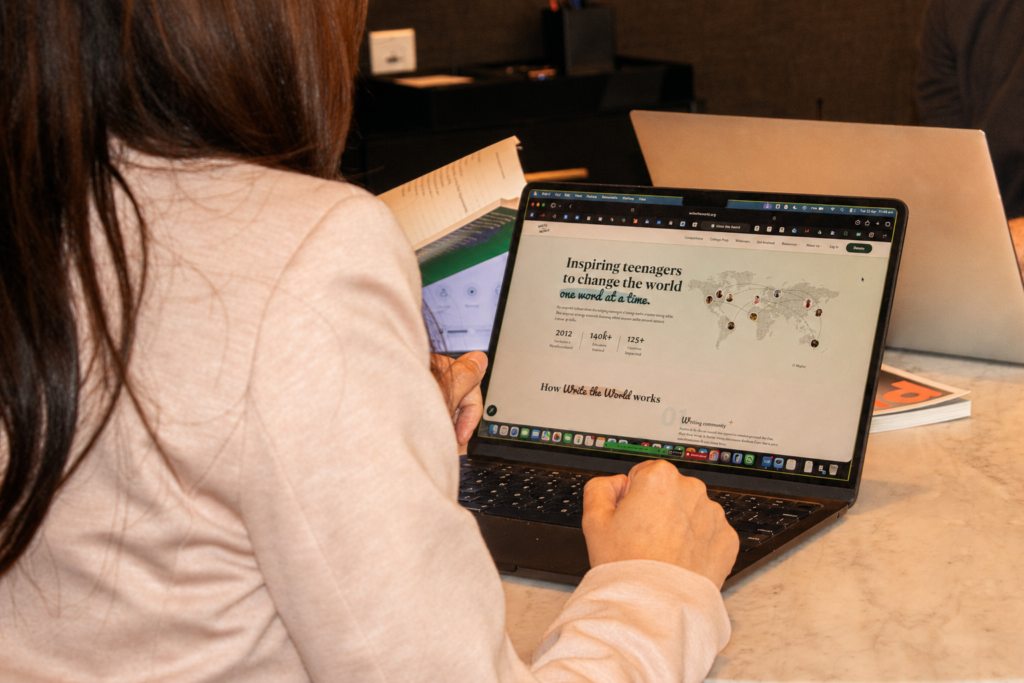
Having a physical base in Harvard Square has also directly shaped Write the World’s partnerships, most notably with Patagonia.
Write the World had a multi-year partnership with Patagonia centered around environmental writing and youth storytelling, rooted in a belief that young people should have a meaningful voice in these critical conversations. The collaboration invited teens from around the world to explore their relationship with nature, reflect on the challenges of climate change, and imagine pathways toward a more sustainable future–ultimately culminating in the opportunity to have their work featured in the nationally distributed Patagonia Journal.
That partnership was made easier by being neighbors. “It’s just one of many examples of how– because we were in the Harvard Square office–we were actually able to literally walk over to the Patagonia Harvard Square store, and talk openly about our joint collaboration. It made such a difference to do this in a live setting,” said Lieberman-Miller.
Having a local presence, “ultimately means real connections feel that much more tangible and powerful,” she said. “It strengthens the fibers of our relationships and allows partners, donors, educators, and community members to experience firsthand the storytelling, collaboration, and sense of belonging that our organization works to foster every day through its programs.”
A Global Community of Young Writers
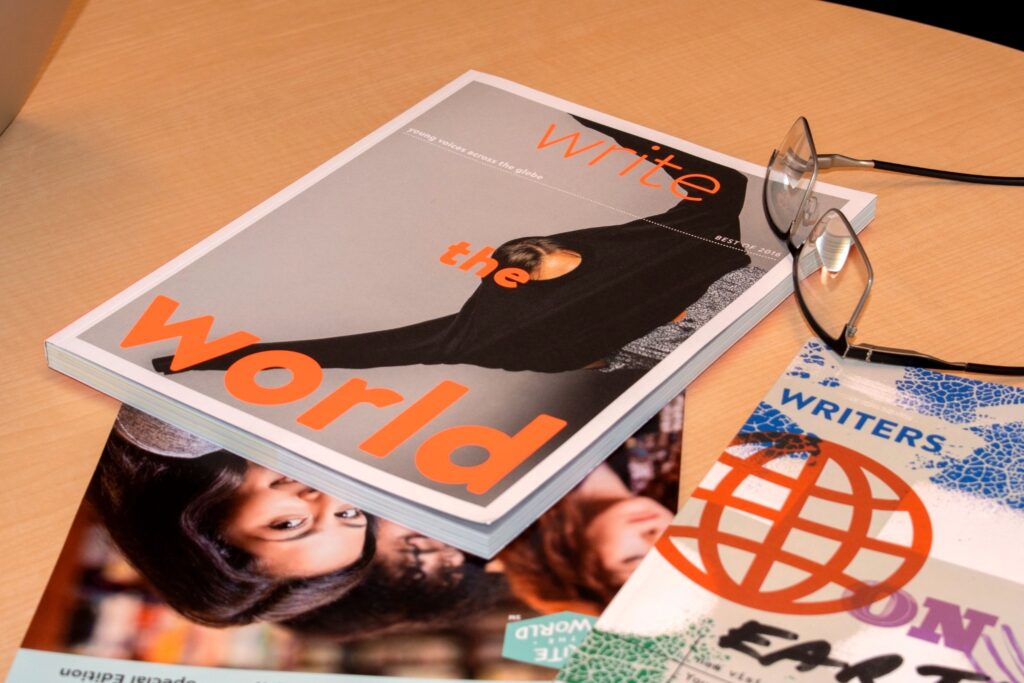
Behind those partnerships is a large and growing community.
Since its founding, the nonprofit organization has grown from a handful of members into a global network of more than 80 staff members supporting over 150,000 young writers, parents, and educators around the world.
Day to day, Write the World supports young writers through an interconnected ecosystem of programs designed to meet students wherever they are in their writing journey. Many begin on their global writing platform, where teens from around the world can respond to creative prompts, publish their work, and exchange feedback with peers—all free of charge. In 2025 alone, young writers on the platform produced more than 12 million words and interacted over 600,000 times through comments, reviews and collaboration, creating what leaders describe as a truly supportive international writing community in a world that often feels alienating to young people.
From there, students often participate in monthly writing competitions, which span genres and themes ranging from poetry and personal narrative to fantasy, environmental writing, and civic discourse. Guest-judged by acclaimed authors, journalists, educators, and cultural leaders, these competitions recognize not only outstanding writing but also exceptional peer feedback, reinforcing the idea that great writers are also thoughtful readers and collaborators.
As students continue to develop their skills and ambitions, they can access deeper learning opportunities through their Summer Writing Camps and College Essay Program. These offerings include live workshops, on-demand courses, personalized college essay support, and rapid essay review services that help students strengthen their writing while building confidence in their voice and perspective.
Together, these programs create a pathway for long-term growth, and develop not only stronger writing skills, but also the confidence, empathy, and critical thinking needed to thrive in school, career, and life.
Write the World is also experimenting with new technology as AI is increasingly used in education. The organization was recently featured in Cambridge Day for its development of Clara AI, a writing tool designed by a Stanford teen, for teens in order to support–rather than replace–student creativity.
Unlike traditional generative AI platforms, Clara uses a Socratic, question-based approach that guides students through the writing process without ever producing work for them. If a student asks the tool to finish a poem or essay, for example, Clara instead responds with prompts and reflective questions that encourage deeper thinking and revision. Released last year, the tool is currently offered free through the organization’s writing community and school partnerships, with ongoing collaborations focused on the intersection of AI, education and youth development.
In Boston, that blend of global mission, local presence, and in-person connection comes together in a single space. For Write the World, Industrious Harvard Square is where a hybrid nonprofit becomes real: where coffee chats evolve into transformative strategy sessions, and a short walk through Harvard Square can spark partnerships that help young writers see themselves as changemakers–their words reaching the world in ways they never thought possible.