Design decisions that shape how people feel, interact, host, pause, focus, gather, and remember.
Issue No. 2
How we designed a workplace to recover from Hollywood
[introduction]
There’s a particular feeling that arrives at the end of a long day in the California sun. You’re a little worn out but strangely alive.
It’s the moment you step out of the heat and into the shade. The first sip of something cold. The feeling of your shoulders dropping half an inch before you realize they were tense.
Most workplaces are designed to energize us. They aim to inspire, activate, stimulate. More color. More movement. More reasons to look up from your screen.
When the Design Team began work on Industrious Burbank, they started somewhere else entirely: not with the pursuit of more energy, but with the feeling of getting it back.
Located inside Studio Plaza, in the orbit of studios like Warner Brothers, production offices like NBC, and creative teams whose days are often defined by deadlines and constant output, the space was designed around a different question: What if work felt like an exhale? What if the most productive environment wasn’t the loudest one, but the one that knew when to quiet down?
The idea appears throughout the space. In the softened palette of apricot, melon, cream, and orchard green. In the dappled afternoon light. In the worn-in textures that feel sun-faded rather than freshly manufactured. In the tucked-away corners designed for focus, reset, or simply a change of scenery.
The Design Team called the concept “Sun-Bleached Citrus Grove.”
But beneath the color palette and material selections is something simpler.
A workplace doesn’t always need to give you more energy.
Sometimes it needs to give some back.
[designing a feeling]
When asked who Industrious Burbank was designed for, Design Lead and Senior Design Manager Claire Keener didn’t cite a specific profile, but said: no one, and everyone.
Many workplace projects begin with a user profile, like a founder or an agency. Like a picture of who will occupy the space and what they’ll need from it.
Burbank just began with a feeling.
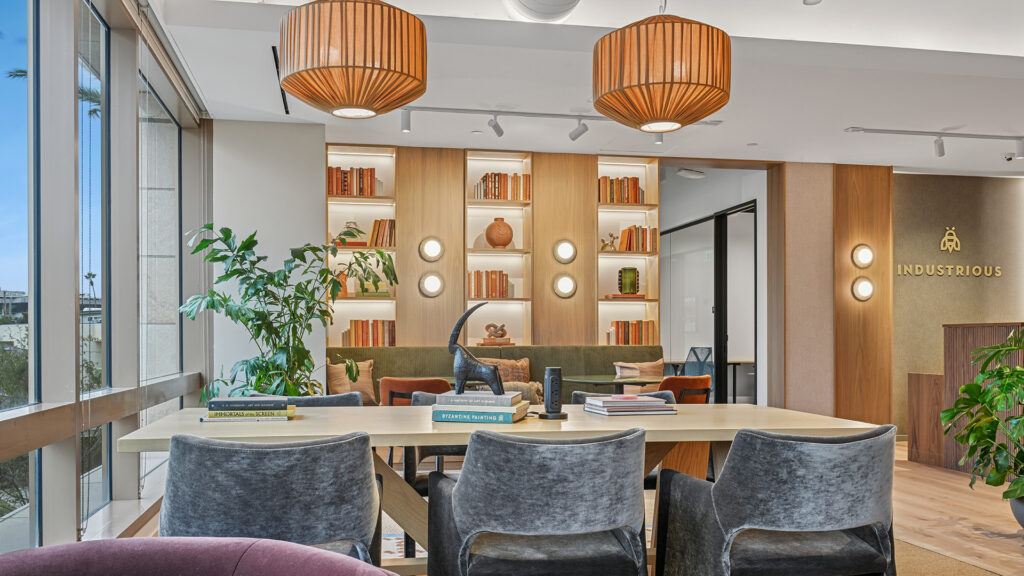
That emotional target shaped nearly every decision that followed, from the palette and material selections to the placement of greenery, lighting, and furniture throughout the floor.
The question wasn’t “Who works here?”
It was, “How should work feel here when they do?”
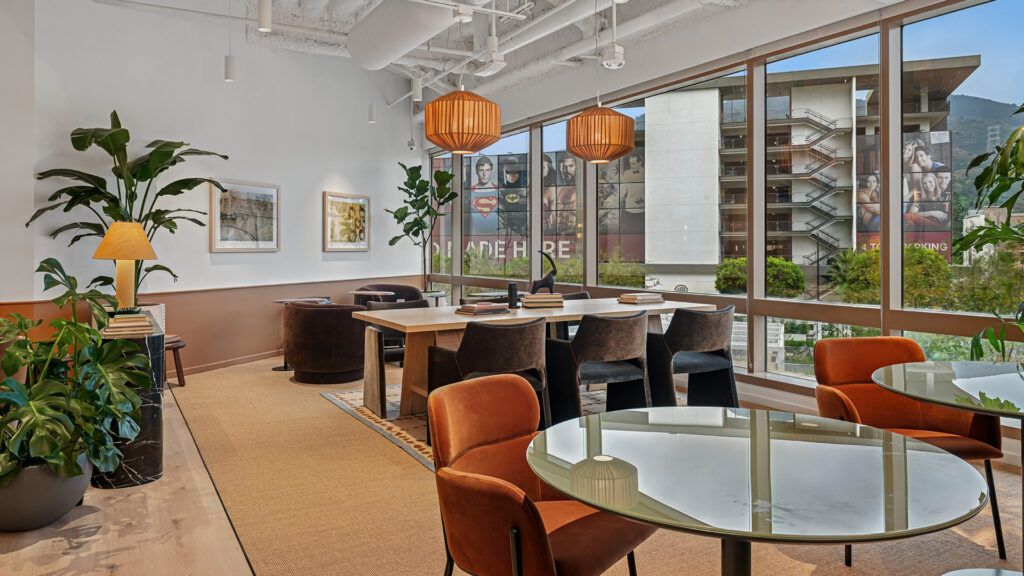 “The main thing I was trying to achieve was the feeling of stepping out of the sun and into the shade.”—Claire Keener, Senior Design Manager
[what sunlight does to things]
Even though it overlooks one, the visual inspiration for Burbank wasn’t drawn from a studio lot or a Hollywood backlot. It came from nature.
Think, a poster left on a wall all year long; fabric faded by a window; surfaces slowly altered by sunlight, season after season. Rather than fighting those effects, the Design Team embraces them.
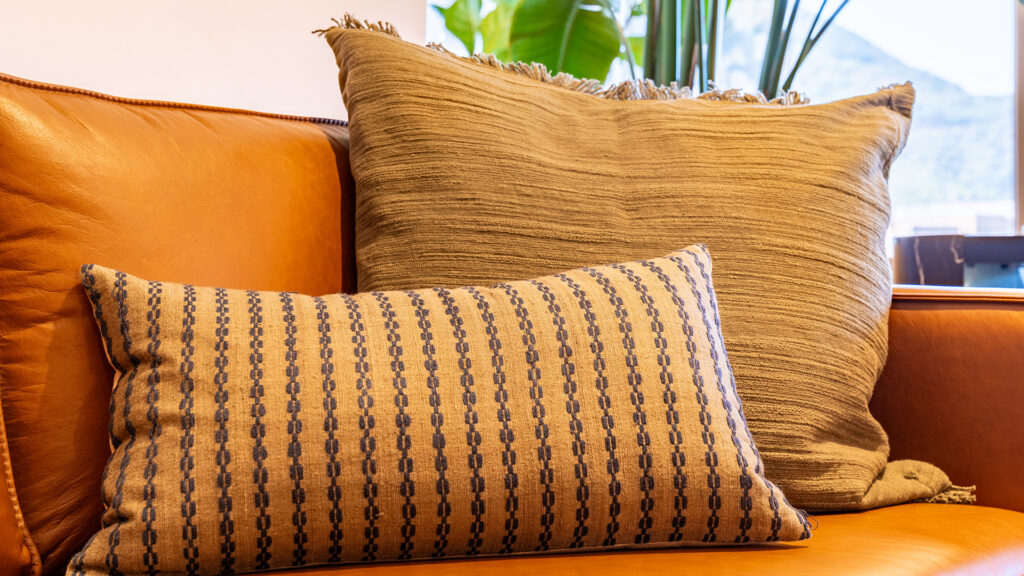

Throughout the space, colors appear softened rather than saturated. Melon, apricot, cream, orchard green, and warm wood tones feel less freshly applied than gently weathered. Materials carry texture. Edges aren’t always perfectly crisp. Light moves across surfaces the way it does outdoors—filtered, dappled, and constantly changing.
Even the tile sparked questions during construction. More than once, installers stopped to confirm they had received the correct material. The edges looked worn. Slightly imperfect. Almost aged.
They were. That was the point. The goal wasn’t to make the space feel “new.” It was to make the space feel “lived in.”
How do you build something new and make it feel worn-in and approachable?
—Claire Keener, Senior Design Manager
[different spaces for different energies]
For all the attention given to where people work, people spend surprisingly little time talking about how work feels.
The needs of a workday are rarely static. A morning might begin with focused individual work, transition into a collaborative meeting, pause for lunch, and end with a conversation that was never scheduled in the first place.
Rather than treating the workplace as a single environment, Burbank was designed as a series of distinct moods, with hospitality woven through all of them.
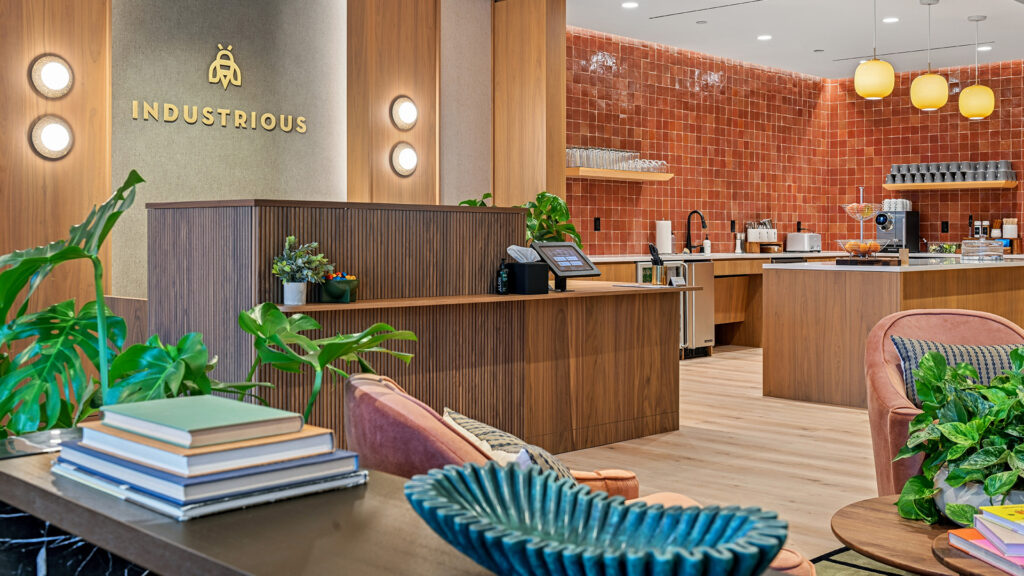 No two workdays ask for the same thing
At one end of the spectrum sits the café: bright, social, and full of movement. Nearby lounges provide a softer kind of energy—spaces for informal meetings, solo work, or simply changing scenery for an hour. Further into the floorplate, the atmosphere shifts again. A library-like retreat, tucked-away seating areas, and quieter corners offer a different kind of focus.
People are looking for a variety of experiences throughout their workday.
—Claire Keener, Senior Design Manager
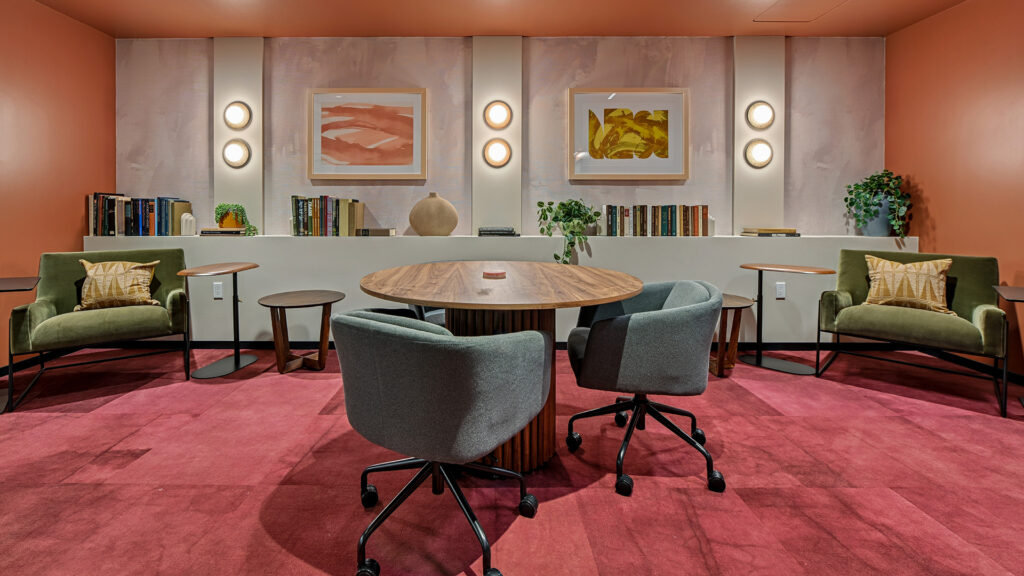 A quieter counterpoint to the Café.
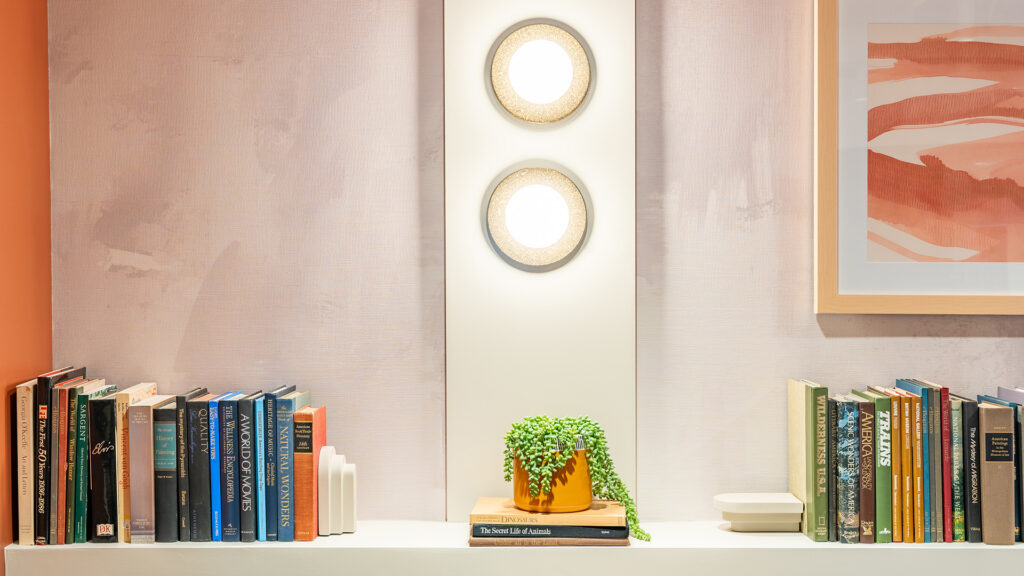
Some of the most successful spaces weren’t part of the original concept at all.
As the project evolved, the team began discovering opportunities hidden within the floorplan itself: unusual angles that became reading nooks, lounge groupings that felt unexpectedly intimate, corners that naturally invited people to slow down.
No, these moments aren’t very large. They’re simply places to pause.
And in a workplace, that can be surprisingly valuable.
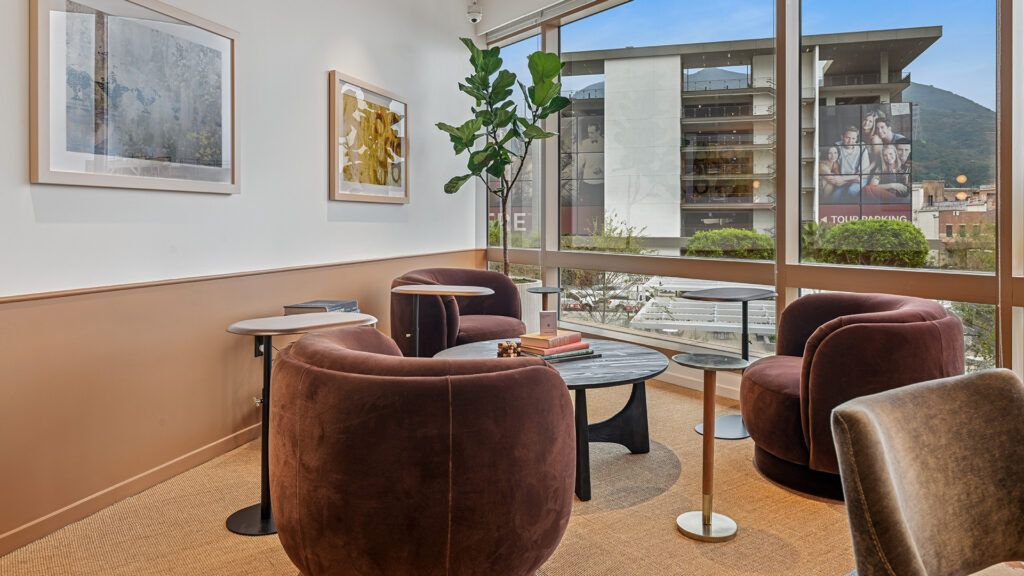 An accidental nook: Created by an awkward angle in the floor plan, this corner became one of the most comfortable places in the workspace
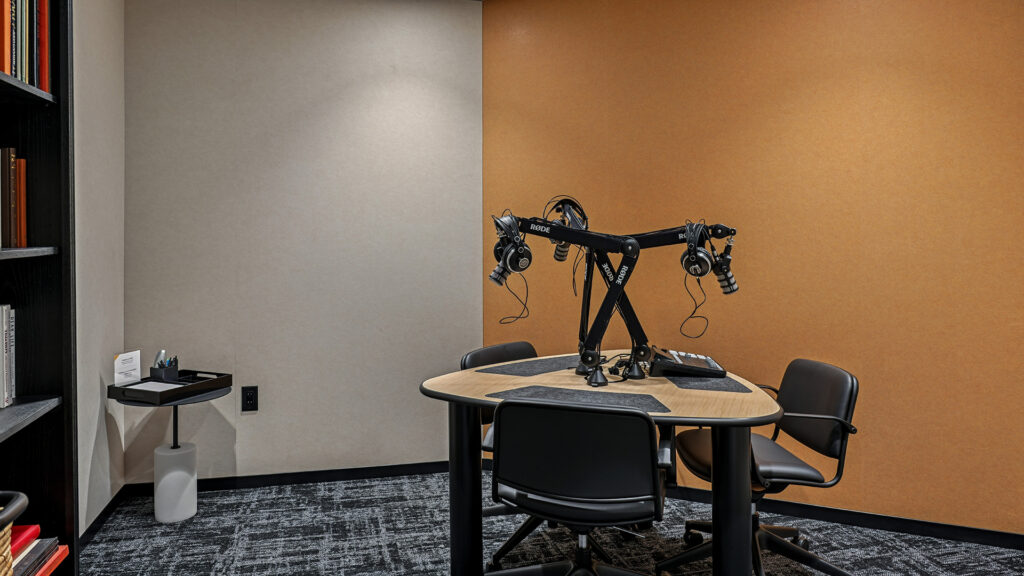 The Podcast Studio. A recording studio by design. Originally introduced as a creative amenity and a practical solution for a deeper part of the floorplate, the space became something else, too: a tucked-away retreat
Good workplaces provide places to work.
[“Retro Optimism”]
There are countless ways to decorate a workplace with Burbank in the background. You could lean full “Hollywood.” Fill the walls with movie references. Borrow from studio lots, sound stages, marquees, and production culture. You could make the location feel unmistakably tied to the entertainment industry.
Our Design Team, instead, drew inspiration from a quieter version of California: faded roadside signs, stylized lettering, sun-washed storefronts, old motel typography, and the particular kind of optimism embedded in places built during the state’s long era of growth and possibility. Not nostalgia for the past, but an appreciation for the confidence and warmth those environments carried with them.
That influence appears throughout the space in subtle ways. Rounded forms. Softer colors. Graphic details that feel familiar without feeling referential. The result feels distinctly Californian without relying on any of the usual shorthand.
Because the people who work here already know where they are.
The design doesn’t need to remind them.
I wanted the space to feel relevant to the California region, but not necessarily feel like people were getting beaten over the head by the fact that they’re in Burbank.
—Claire Keener, Senior Design Manager
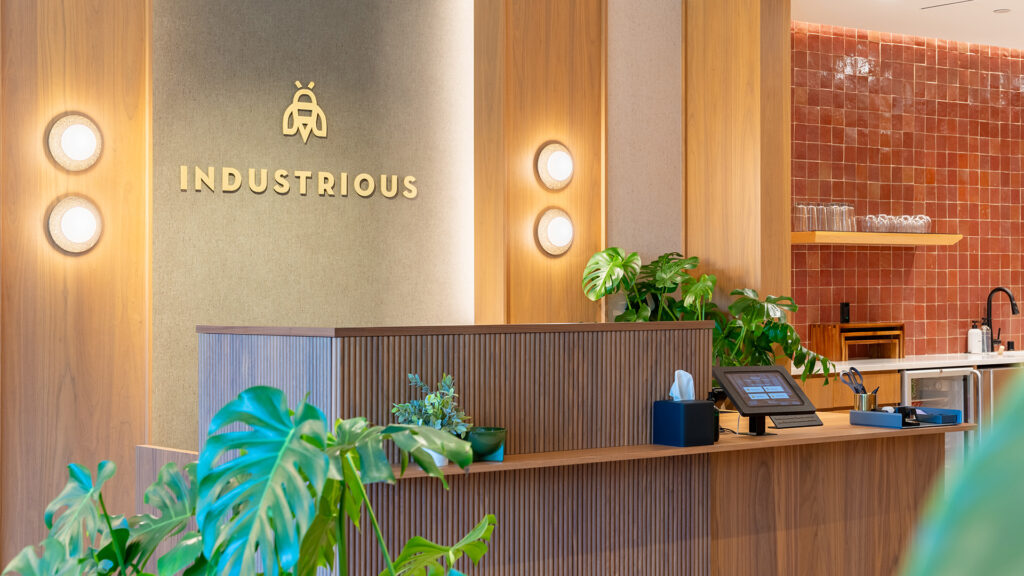
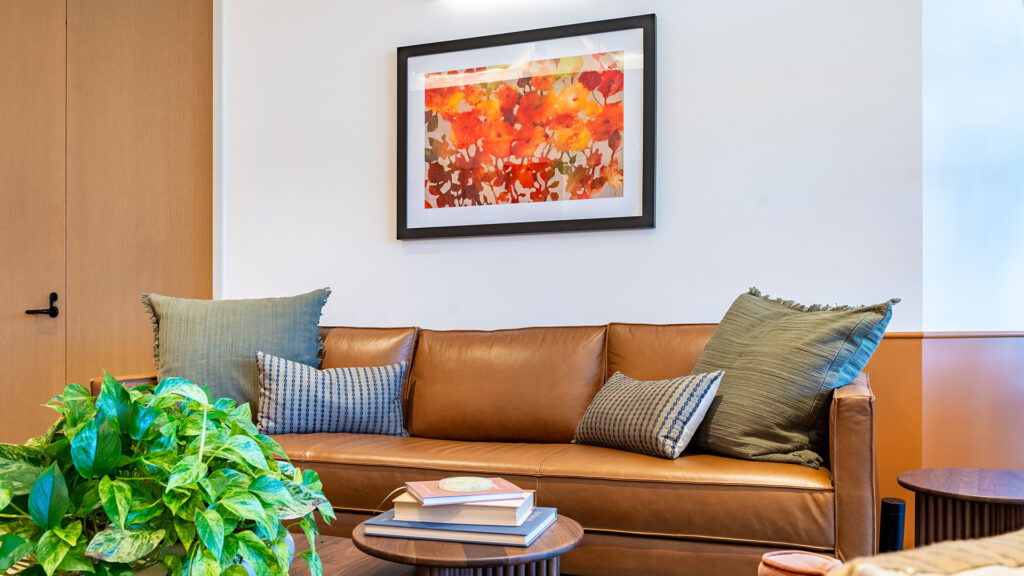
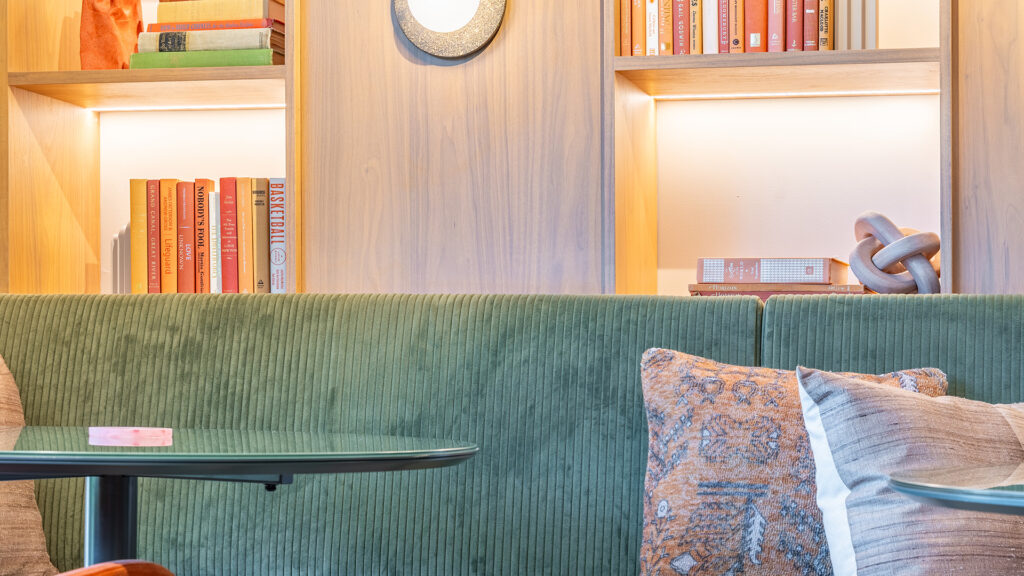 A California influence expressed through light, color, and atmosphere rather than literal references.
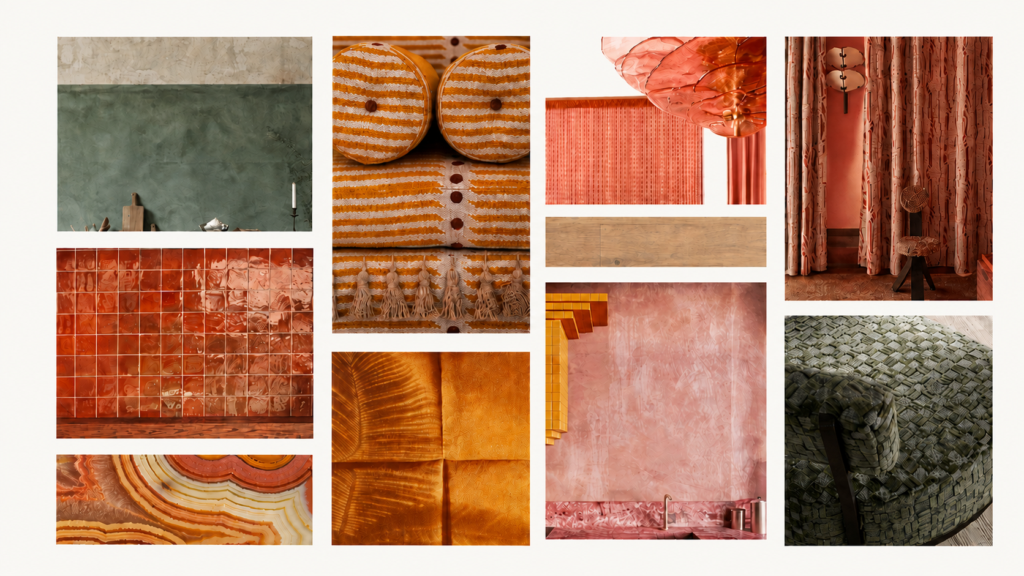 The project’s “Sun-Bleached Citrus Grove” concept drew inspiration from the fading effects of sunlight, retro California graphics, and the softened palette of materials left outdoors over time.
[the worn-in test]
At one point during construction, the tile installer stopped and asked a question. Was this the right material?
The edges looked uneven and slightly imperfect and maybe even damaged.
It was exactly the right material.
For Keener, the moment became something of a litmus test for the entire project.
Many new workplaces are designed to feel pristine, with crisp surfaces and untouched finishes. But Burbank was chasing something different. Not old. Not distressed. Just approachable. The kind of space that feels comfortable from the moment you arrive, and more comfortable the longer you stay.
Building something new is easy.
Building something new that already feels lived with is much harder.
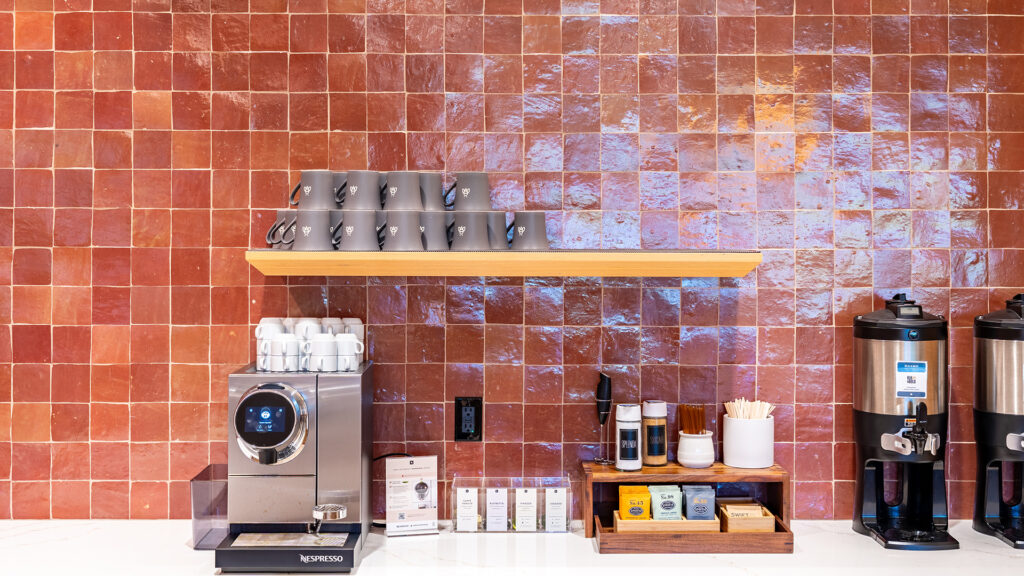 The tile installer thought it was the wrong material multiple times.
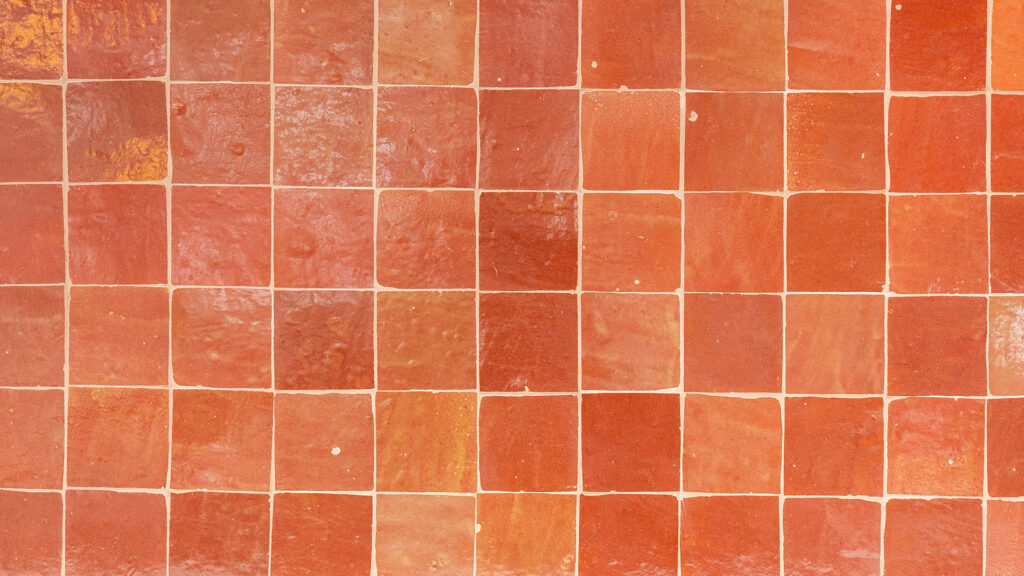 The imperfect edges were intentional
The result is a space that feels less like a showroom and more like somewhere people naturally settle into. That, to us, is humanity.
[still thinking about…]
Most workplaces are designed to help people do more.
Burbank begins with a different assumption: that people already carry enough energy, ambition, and stimulation with them.
Maybe what they need is a place that helps balance it.
A little more shade. A little more softness. More room to choose how the day unfolds.
Not every workplace needs to demand your attention.
Sometimes the best ones simply make it easier to stay awhile.
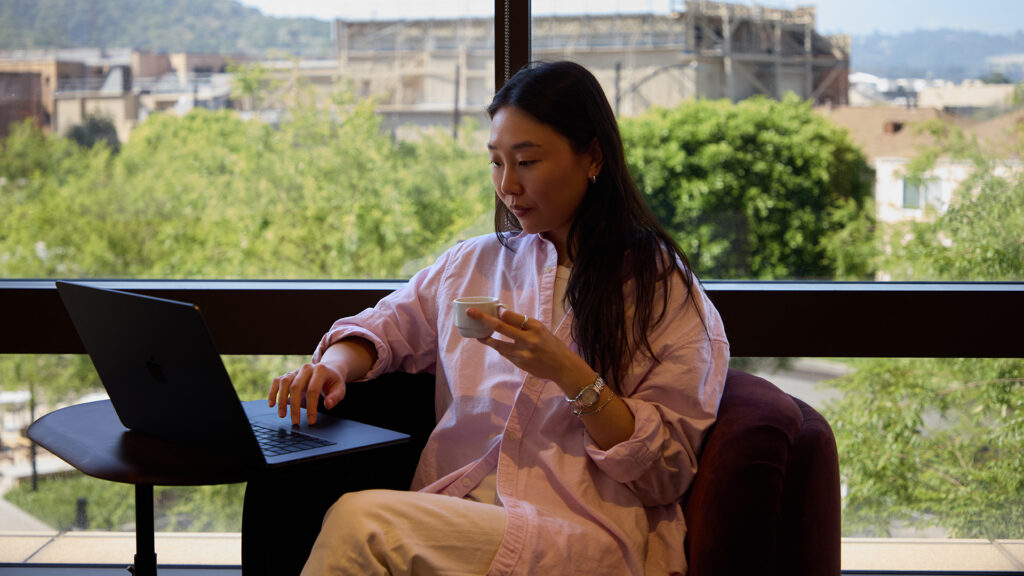 The shade after the sun