What it takes to make people feel at home anywhere
When Industrious first launched in the U.S., our approach to coworking was simple yet revolutionary: treat the workspace with experience in mind first and measure success not only by occupancy but by human happiness.
Fast forward, and that philosophy is being tested on a much larger stage. As Industrious continues to expand into Europe, we aim to translate our signature blend of hospitality, design, and emotional intelligence into cities with very different work cultures, expectations and aesthetic thresholds.
The challenge is clear. Unlike the U.S., where office culture is relatively homogeneous, European markets are varied. In the Netherlands, nearly half the workforce is part-time, and professionals demand high-quality, thoughtfully designed spaces. In Germany, the focus is on practical reliability and robust work environments. The U.K., particularly London, expects premium service at every touchpoint, from coffee quality to bathroom upkeep.
For Industrious, exporting our work experience model requires understanding the nuances of how work is lived and felt in each market.
The 80/20 Rule: Standardize, then localize
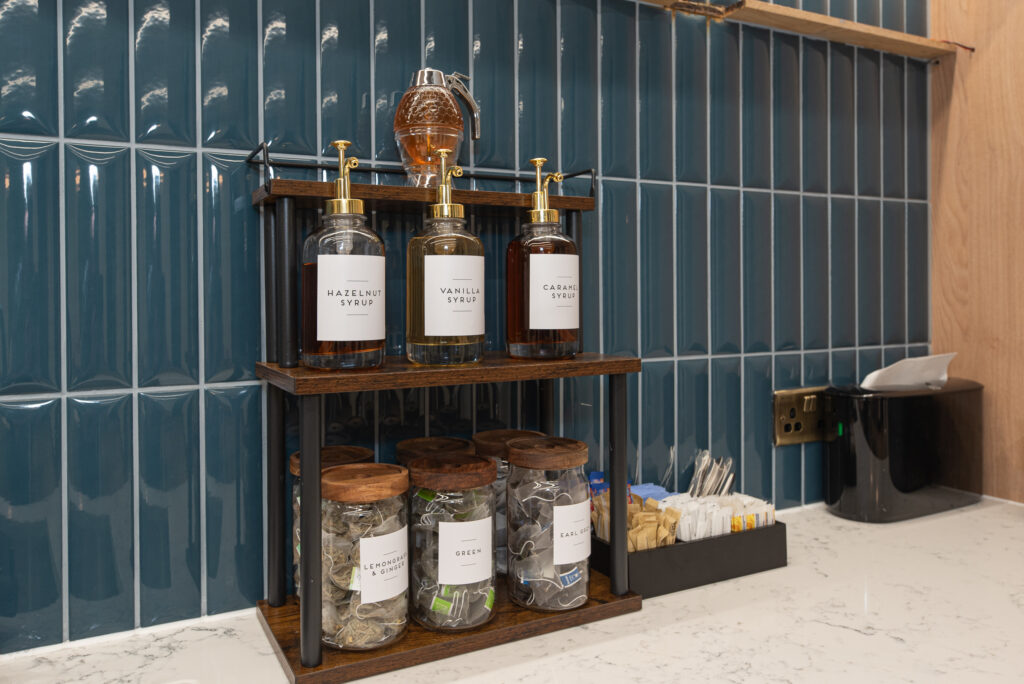 Tea station at 24 Chiswell in London, UK
Industrious approaches this task with what we call the “80/20 rule.” Roughly 80 percent of the experience is standardized: service protocols, booking systems, workspace layouts and basic amenities are designed to meet the expectations of a modern office worker anywhere in the world. The remaining 20 percent is where local nuance comes into play. This is the part that requires cultural fluency, emotional intelligence and deep immersion in each city’s rhythms.
The most challenging part isn’t the square footage or the furnishings. It’s the local flavor, the small, subtle cues that make someone feel at home.
For Industrious, the 20 percent manifests in ways both obvious and invisible. In Amsterdam, that means designing spaces that feel serene and reflective, yet fostering social connections and sustainability. In Berlin, it’s about blending heritage with creative energy, allowing for experimentation in design while meeting German expectations for quality and functionality. In London, it’s architectural elegance paired with enterprise-ready services, ensuring that Industrious stands as a benchmark for premium hospitality in the corporate coworking world.
Local Teams: The heart of experience
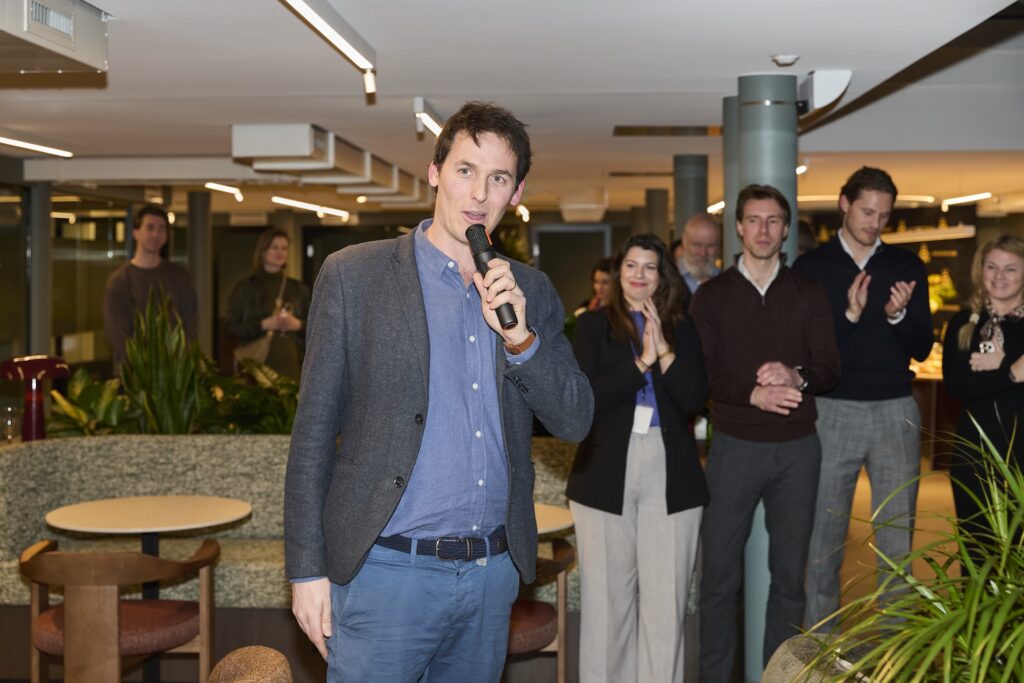 Tom Redmayne, SVP, Head of Europe at The Gent’s Launch Event
Executing this vision takes more than good design. It takes the right leadership to bring the experience to life across markets, teams, and customer needs. For Industrious in Europe, that leader is Tom Redmayne, SVP, Head of Europe. Tom oversees the company’s European business and global sales function, helping connect Industrious’ hospitality-led workplace model to the needs of companies operating across regions. As Industrious continues to grow in Europe, his focus is clear: build a strong local business while delivering the same thoughtful, high-quality experience members and enterprise customers expect from Industrious around the world.
“European culture is extremely nuanced. People want to focus on everything else besides work. Our job is to give them a reason to spend time in our spaces, to feel happier, safer, and, in turn, more productive. That requires understanding local expectations like what makes someone feel recognized, what makes them come back.”
Key to this is staffing. Every market leader is either a local hire or someone who has moved into the market out of passion for the city and its culture. These leaders understand not just the workspace but the city itself, including where to dine, what to recommend for after-hours activities and how to guide members through local customs. The best teams are embedded in the community. They know how to create value every day, beyond just the office.
City Spotlights: Translating belonging across borders
Industrious’ European portfolio illustrates how global standards and local character can coexist, creating spaces that feel both familiar and unique.
Amsterdam – The Gent
Industrious at The Gent is a hospitality-driven workspace that makes the whole building more dynamic and convenient. It offers access to beautifully designed lounges, meeting rooms and high-quality event venues that extend the workplace without extra overhead. Flexible offices support project teams, visiting colleagues or short-term needs, creating room to grow without the long lease. Most importantly, it fosters a vibrant community and premium experience that elevates daily life for every tenant in the building.
Berlin – BEAM
In Berlin, Industrious experiments with design to reflect the city’s heritage and creative energy. While German professionals often prioritize practical elements like furniture, reliable technology and safety features, the spaces also incorporate subtle touches that enhance comfort and inspiration. Here, belonging is built through reliability and thoughtful details rather than overt aesthetics, showing how local culture shapes the interpretation of hospitality.
At BEAM, it’s a Berlin landmark reimagined. Once home to Einstein’s lectures, the historic Schicklerhaus now hosts a future-forward workspace that blends heritage with innovation. Picture yourself prepping for a client pitch in the quiet Drawing Room over your afternoon coffee, curated art on the walls, and the soft hum of conversation drifting in from the Café downstairs. One floor down, a team workshop wraps up in the Conference Hub, just in time for rooftop drinks overlooking the Berlin skyline.
London – 15 Fitzroy
London represents the pinnacle of premium coworking, and 15 Fitzroy sets the standard. With architectural precision and a meticulous focus on service, the space mirrors the city’s high expectations. Premium coffee, hotel-level amenities and elegant design combine to create an environment where enterprise clients feel both supported and inspired. In London, hospitality is as much about perception as it is about functionality.
Hospitality as a differentiator
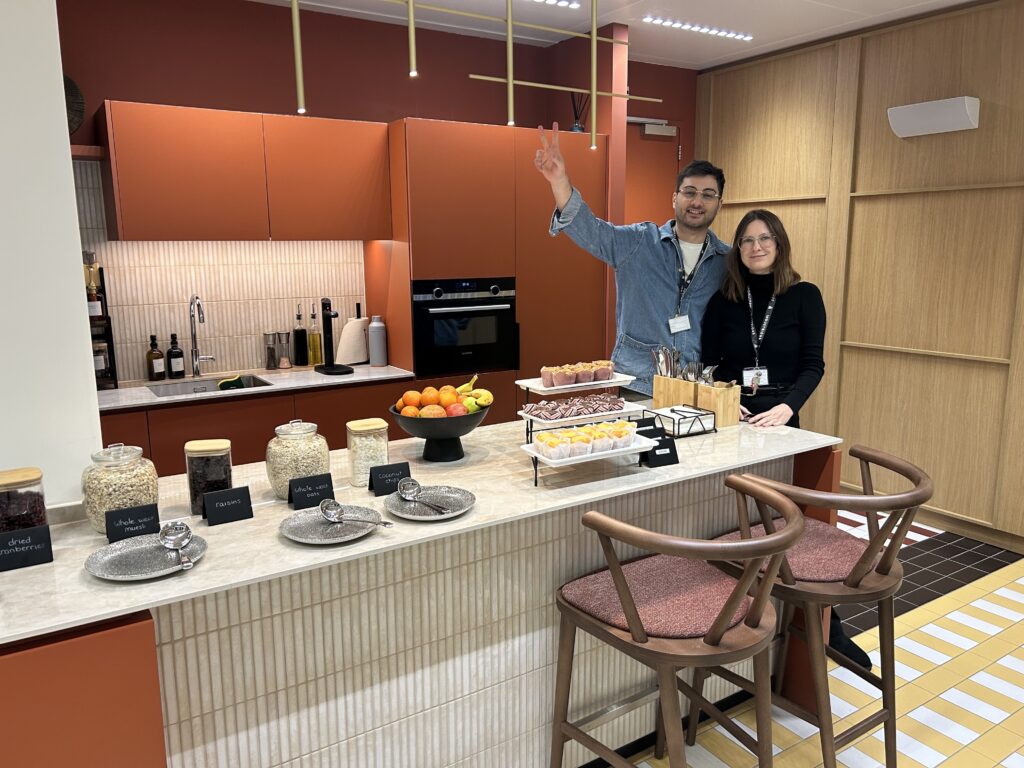 Muffin Day at The Gent in Amsterdam, Netherlands
Across all markets, Industrious’s success depends on emotional intelligence applied at scale. Spaces are designed not just for utility but to evoke feelings of safety, recognition and joy. Members spend more time in environments where they choose to be, not where they feel obliged to be. Utilization rates, happiness scores and engagement metrics reflect this approach: when people feel welcomed and understood, they work better, collaborate more and ultimately view Industrious as an indispensable part of their professional lives.
Programming and place-making are key levers in this equation. Spaces allocate roughly 70 percent of their square footage to communal and flexible work areas, and 30 percent to amenities and services. This flips the conventional coworking model, emphasizing interaction, collaboration and social engagement while maintaining functional efficiency. In smaller European buildings, this design logic becomes even more crucial.
The role of design and belonging in global consistency
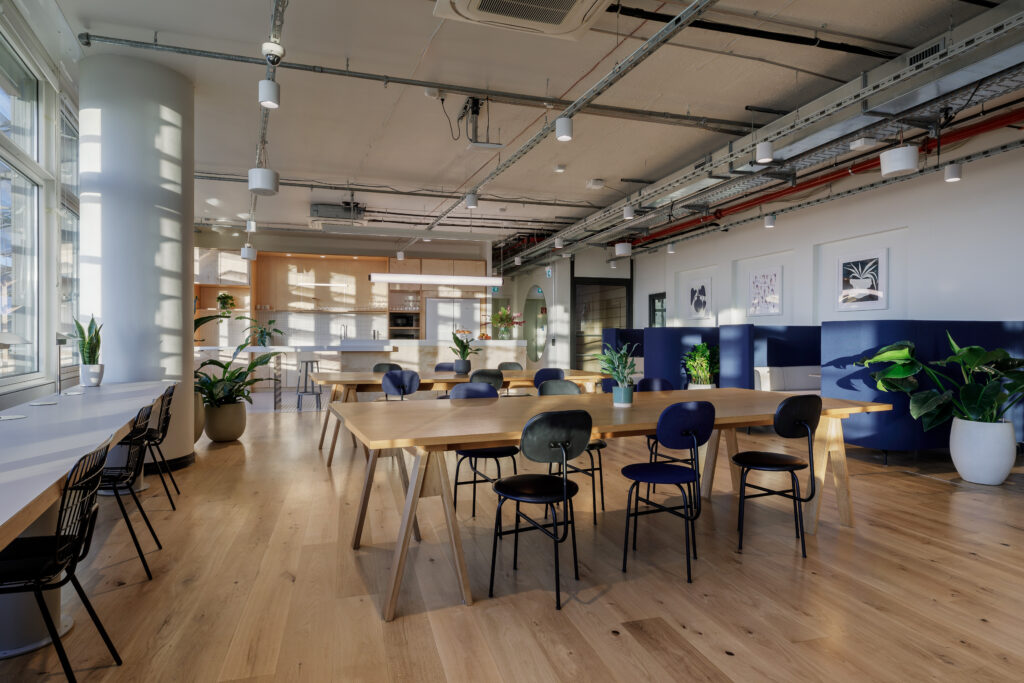 Inside Atrium Tower in Berlin, Germany
Design acts as a universal language for Industrious. While the aesthetic vocabulary may shift—canal-inspired calm in Amsterdam, industrial-modern in Berlin, architectural elegance in London—the underlying principles remain the same. The goal is “feel-first” design: environments where members sense hospitality before they consciously see it.
Industrious’s European expansion demonstrates that belonging can scale, but only through local nuance. Success isn’t measured just by square footage or number of offices opened. It’s measured by the degree to which members feel welcome, supported and understood. That requires local knowledge, emotional intelligence and teams that know their cities as well as their operations manuals.
Every detail, including the color of a wall, the choice of coffee, the design of a lounge, is a message. It says, ‘You belong here.’ And when people feel that, they engage more, spend more time and achieve more.
Looking ahead
This year, Industrious is continuing to deepen our European footprint with new locations that reflect both the consistency of the brand and the distinct character of each market. In April, Industrious Frankfurt at Global Tower opened in the heart of the city’s Central Business District, bringing our hospitality-led model to one of Europe’s most important financial centers. As our first Frankfurt location, it reflects the practical precision, premium service, and enterprise-ready environment that define how we are showing up in Germany.
This summer, Industrious OSMO will open in London’s Nine Elms district, extending our presence in one of the world’s most competitive office markets. Set within a new work campus in Battersea, OSMO brings together flexible workspace, thoughtful design, strong end-of-trip amenities, and signature Industrious hospitality in a neighborhood shaped by growth, regeneration, and new energy.
Together, these openings signal what comes next for Industrious in Europe: not growth for growth’s sake, but careful expansion into cities and buildings where hospitality, flexibility, and local understanding can create real everyday value. We’re also refining our approach to place-making across entire buildings, integrating external tenants into the social and professional ecosystem through our tenant experience management offerings, and expanding flexible products to meet changing expectations around where and how work happens.
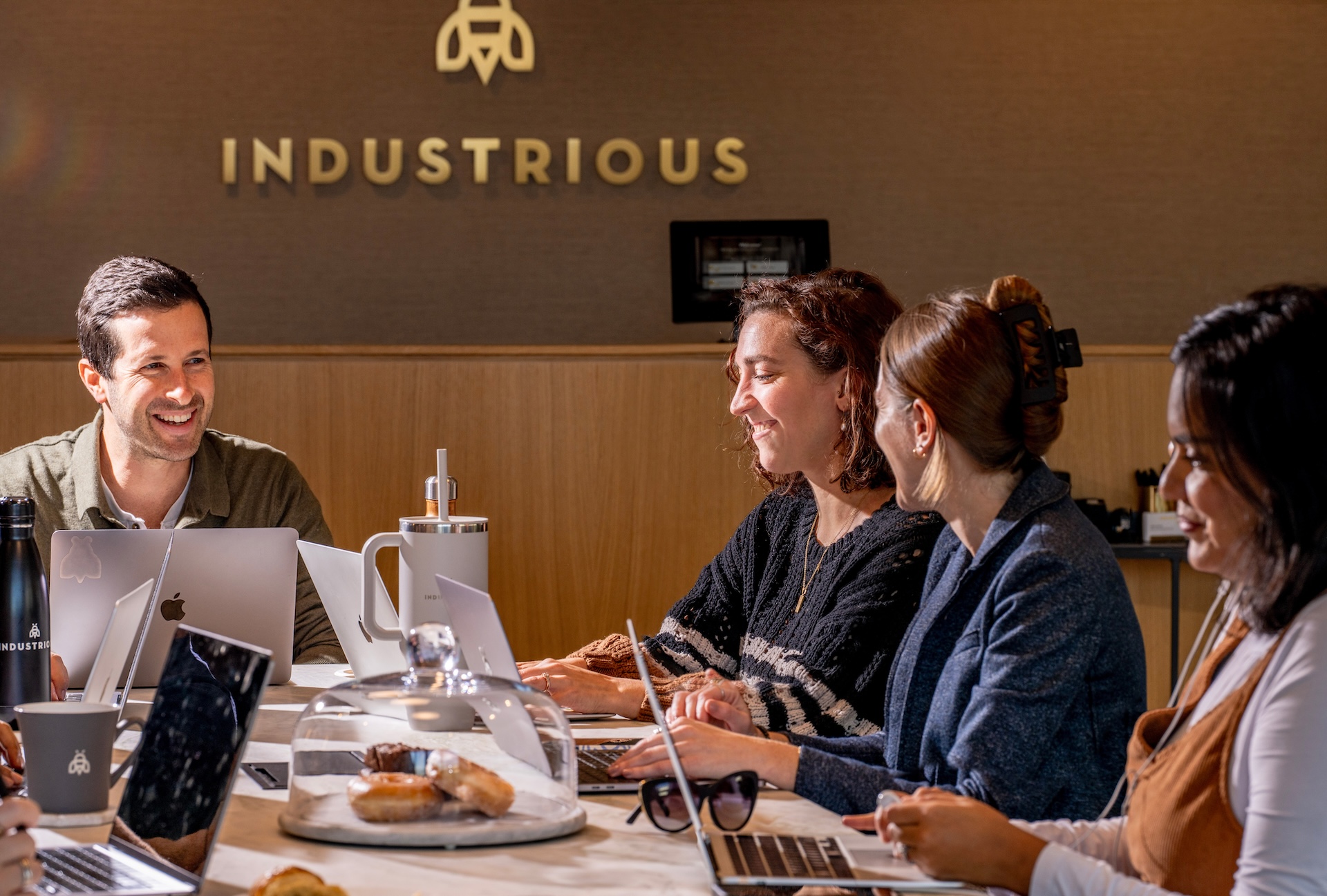
For members, the invitation is simple: visit an Industrious in another city and experience the local interpretation of a global standard. For partners and operators, the lesson is just as clear: scaling hospitality is not about replicating a template. It is about translating a feeling, understanding what drives happiness and productivity in each market, and building teams that can bring that to life every day.
Industrious is proving that a global brand can maintain our human touch. Through careful curation, thoughtful staffing, and design that prioritizes emotion, it is redefining what work feels like across borders. Belonging, it turns out, travels well, but only when it travels with insight, care and attention to the subtle art of local culture.